Las Cruces
Perception Study
A multi-stakeholder perception study for the Las Cruces Research Station (OET) — exploring how scientists, local communities, visitors, and tourism operators experience and understand a tropical biological station, and what that gap means for its future.
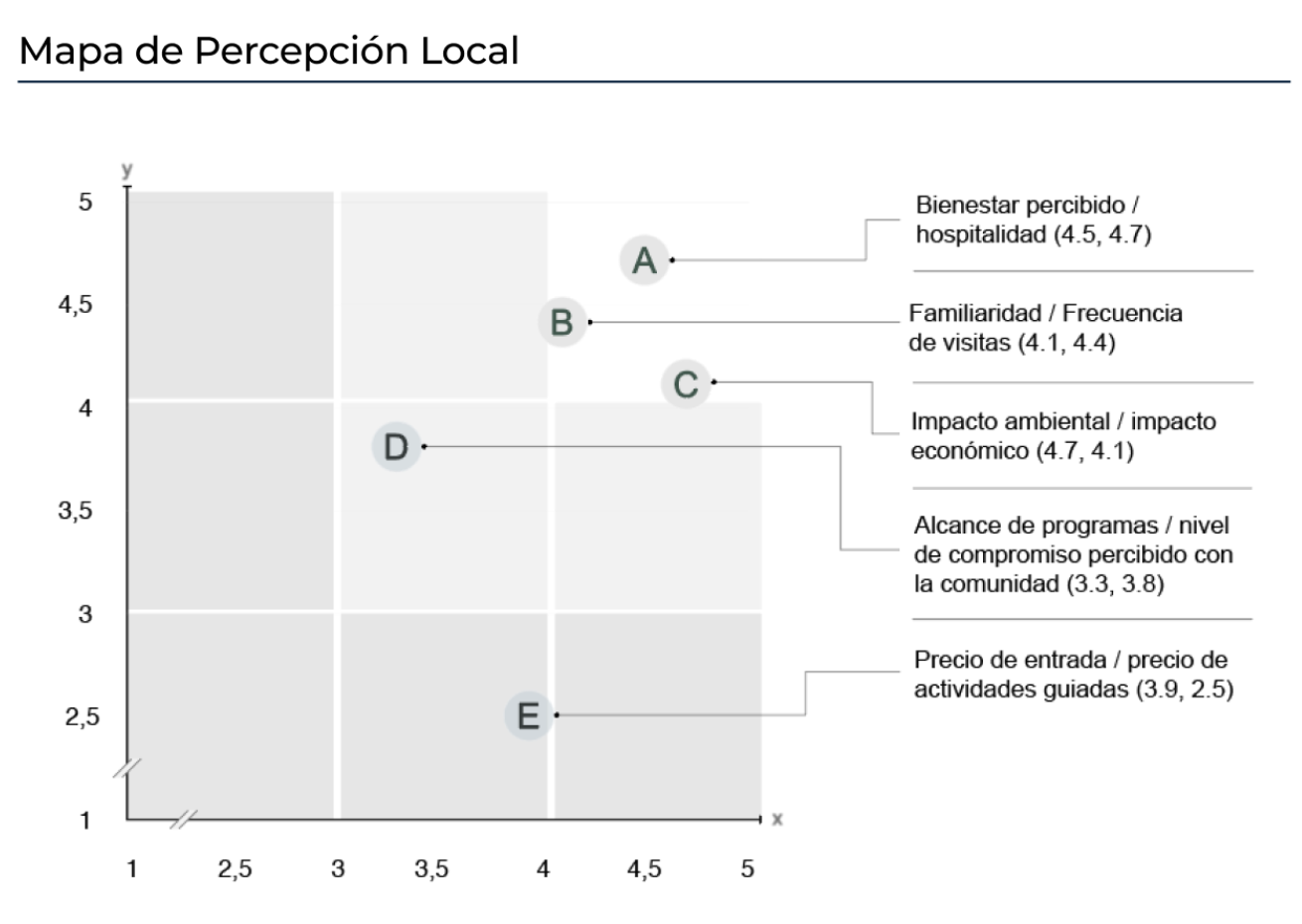 Add file: lascruces-map.png
perceptual map from the study
Add file: lascruces-map.png
perceptual map from the study
Las Cruces Research Station operates at the intersection of science, conservation, community, and tourism in southern Costa Rica. As scientific tourism has declined and grant dependency has increased, the station faces pressure to diversify its revenue model and deepen its relationship with surrounding communities.
The core tension: the station's identity is built around scientific research and international visitors, but the communities closest to it — and most affected by land use decisions — have limited access and low visibility in institutional narratives.
Four distinct stakeholder audiences were mapped and engaged separately: local population, international visitors, tourism operators, and environmental and community actors. Each group carries a different perception of what the station is, who it is for, and what value it generates.
Quantitative surveys established baseline perceptions across the full sample. In-depth interviews with 10 stakeholders surfaced the structural tensions, unmet expectations, and untapped opportunities that surveys alone cannot reach.
Analysis produced perceptual maps charting how each audience positions the station relative to their own needs, and affinity diagrams clustering recurring themes across all groups.
The study identified significant gaps between institutional strengths (research infrastructure, biodiversity, international reputation) and community access (local knowledge of what the station offers, pathways for participation, economic benefit). These gaps are not inevitable — they are the result of communication and design decisions that can be changed.
Recommendations centred on three priorities: expanding environmental education and outreach to local schools and community groups; restructuring communication to be legible to non-scientific audiences; and developing territorial programmes that position the station as a resource for the region, not just for international science.